
Robotic surgery in urology is a minimally invasive surgical approach where the surgeon controls robotic instruments from a console. It can help in selected prostate, kidney, bladder, and reconstructive urology procedures where precision matters. The bottom line: robotic surgery is not done by a robot alone, and it is not automatically better for every patient. It is useful only when the diagnosis, anatomy, disease stage, and treatment goal make it the right approach.
What Is Robotic Surgery in Urology?
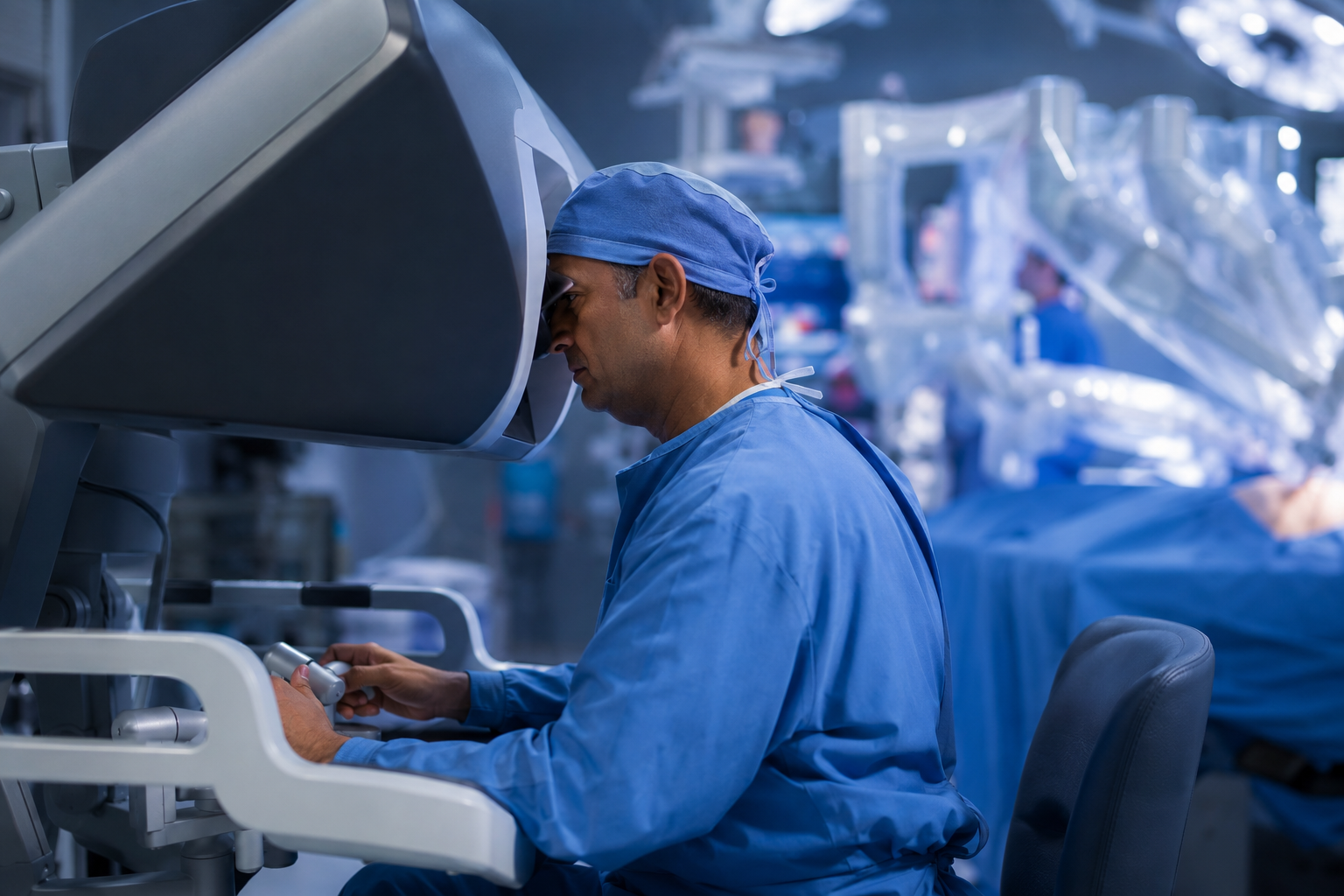
Robotic surgery in urology uses a surgeon-controlled robotic system to perform operations through small incisions. The surgeon sits at a console, views the surgical area in magnified 3D vision, and controls fine robotic instruments with hand and finger movements.
The robot does not think, decide, cut, or operate independently. Every movement is controlled by the surgeon. The robotic system simply translates the surgeon’s movements into precise instrument motion inside the body.
In urology, this can be helpful because organs such as the prostate, kidney, bladder, and ureter are deep inside the body and often close to important blood vessels, nerves, urinary passages, and reproductive structures.
Why Robotic Surgery Matters in Urology
Many urological operations need careful dissection in narrow spaces. Robotic instruments can move with a wrist-like range of motion, which may help the surgeon work around delicate tissues with better control.
The main advantage is not that the surgery is “high-tech.” The advantage is better access, vision, and precision in selected cases where those features can improve surgical handling.
Robotic urology surgery is most useful when the operation requires fine tissue separation, accurate suturing, nerve preservation, reconstruction, or work deep in the pelvis.
- Magnified high-definition 3D view of the surgical field
- Small incisions compared with many open operations
- Fine wrist-like movement of instruments inside the body
- Better access in deep pelvic or abdominal areas
- Potentially less blood loss in selected procedures
- Often shorter hospital stay than open surgery
- Structured recovery with planned follow-up
Urology Conditions Where Robotic Surgery May Be Used
Robotic surgery is not a single procedure. It is an approach that may be used for different urology conditions depending on the diagnosis and patient suitability.
A patient with prostate cancer, kidney tumor, bladder cancer, ureteric narrowing, or complex reconstruction may be evaluated differently. The same robotic platform may be used, but the operation, recovery, risks, and goals are different.
- Robotic prostate surgery for selected prostate cancer cases
- Robotic partial nephrectomy for selected kidney tumors where kidney preservation is possible
- Robotic radical nephrectomy for selected kidney cancer cases
- Robotic pyeloplasty for PUJ obstruction or kidney drainage problems
- Robotic bladder surgery in selected bladder cancer or reconstructive cases
- Robotic ureteric reconstruction in selected ureter stricture or injury cases
Is Robotic Surgery Better Than Open or Laparoscopic Surgery?
Robotic surgery is not always better. It is one surgical approach among open surgery, laparoscopy, endoscopy, laser procedures, and non-surgical treatment. The right choice depends on the disease, anatomy, surgeon expertise, hospital setup, and patient goals.
For some procedures, robotic surgery can offer clear practical advantages. For others, standard laparoscopy, endoscopic surgery, laser treatment, or open surgery may be equally good or more appropriate.
This is why the question should not be “Is robotic surgery best?” The better question is “Does robotic surgery offer a real advantage in this specific case?”
How Doctors Decide If Robotic Surgery Is Right
A robotic surgery plan is usually made after reviewing the diagnosis, scans, biopsy or pathology reports, blood tests, kidney function, previous surgery history, anesthesia fitness, and patient priorities.
For patients with cancer-related urology conditions, the urological cancer treatment page may help explain how diagnosis, stage, and treatment goals affect planning.
- Confirm the diagnosis with imaging, biopsy, urine tests, or blood tests as needed.
- Check whether surgery is actually required or whether monitoring, medicines, endoscopy, or another treatment is better.
- Review anatomy, disease location, previous surgery, body habitus, and anesthesia fitness.
- Compare robotic surgery with open, laparoscopic, endoscopic, or non-surgical options.
- Discuss expected benefits, risks, hospital stay, catheter or drain needs, and recovery timeline.
- Choose robotic surgery only if it gives a meaningful advantage for that patient.
Benefits of Robotic Surgery in Urology
The benefits of robotic surgery depend on the operation being performed. A robotic prostatectomy, robotic kidney tumor surgery, and robotic reconstruction do not have the same recovery or risk profile.
In suitable cases, robotic-assisted surgery may reduce surgical trauma compared with open surgery, but outcomes still depend on the disease stage, surgeon skill, patient health, and quality of follow-up.
- Smaller incisions than many open surgeries
- Less blood loss in many suitable cases
- Better visualization of deep surgical areas
- More precise suturing and reconstruction in selected operations
- Potentially shorter hospital stay
- Potentially faster return to routine activity compared with open surgery
- Better cosmetic result due to smaller scars
Risks and Limitations Patients Should Know
Robotic surgery is still major surgery. It requires anesthesia, careful patient selection, and a trained surgical team. It can reduce some risks in selected cases, but it does not remove all surgical risk.
Patients should understand possible risks before surgery and should not choose robotic surgery only because it sounds advanced.
- Bleeding, infection, pain, or anesthesia-related risks
- Injury to nearby organs, vessels, nerves, or urinary structures
- Need for catheter, drain, or temporary activity restriction after surgery
- Possibility of conversion to open surgery in difficult cases
- Procedure-specific risks such as urine leak, incontinence, erectile dysfunction, narrowing, or recurrence depending on the operation
- Higher cost or limited availability in some centers
What Recovery Usually Looks Like
Recovery after robotic urology surgery depends on the exact procedure. Some patients may go home within a short hospital stay, while others need longer observation, catheter care, drain care, or staged follow-up.
Most patients are encouraged to walk early, avoid heavy lifting for a period advised by the surgeon, take prescribed medicines, and watch for fever, increasing pain, wound discharge, difficulty passing urine, or swelling.
In cancer surgery, follow-up may include pathology report review, PSA or imaging follow-up, kidney function tests, or further treatment planning.
- Before surgery: reports, fitness assessment, anesthesia review, and explanation of the procedure.
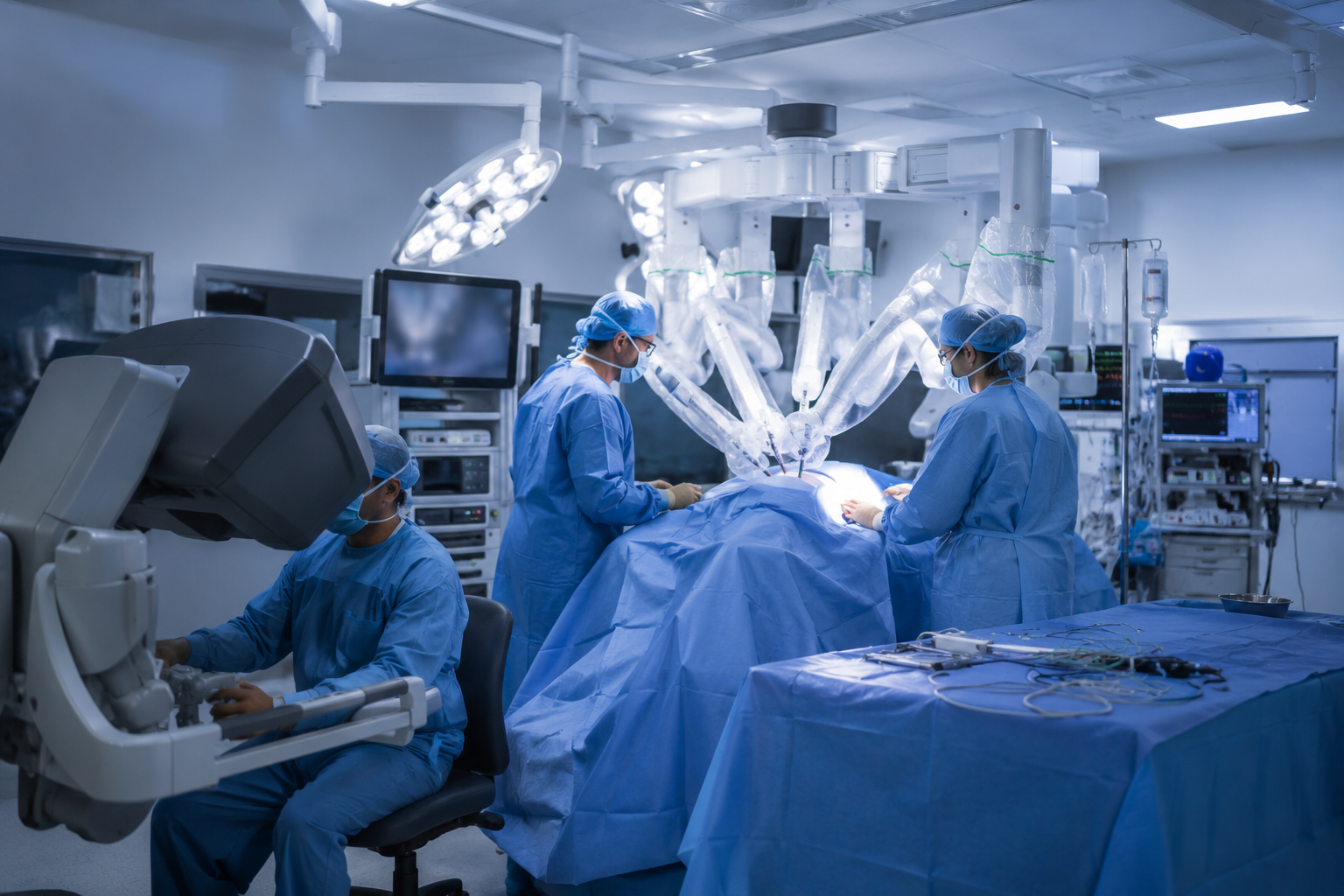
- During surgery: the surgeon controls robotic instruments through small incisions while an assistant supports at the operating table.
- After surgery: monitoring, pain control, early walking, catheter or drain care if needed, and discharge planning.
- At home: gradual activity, wound care, medicines, and avoiding heavy strain until cleared.
- Follow-up: report review, recovery check, and long-term monitoring depending on the condition.
Robotic Surgery for Prostate, Kidney, and Bladder Conditions
Robotic prostate surgery is commonly discussed for selected prostate cancer cases. The goal may include cancer control while preserving urinary control and sexual function where possible, depending on disease stage and anatomy.
If your main concern is urinary symptoms from prostate enlargement rather than cancer, read the prostate problems treatment page because BPH treatment is usually different from prostate cancer surgery.
Robotic kidney surgery may be considered for selected kidney tumors or reconstruction where preserving kidney function is important. Robotic bladder surgery may be used in selected complex cancer or reconstructive situations.
When Should You Consult a Robotic Urologist?
You should consult a urologist and robotic surgeon if you have been advised major urology surgery, have a prostate cancer diagnosis, kidney mass, bladder cancer, PUJ obstruction, ureteric reconstruction need, or want a second opinion about open versus laparoscopic versus robotic surgery.
Patients searching for the Best urologist in Gurgaon for robotic urology surgery, prostate cancer surgery, kidney tumor surgery, bladder cancer surgery, or complex urinary reconstruction can consult Dr Vikram Barua Kaushik at Urowellness Clinic.
Urowellness Clinic is a urology clinic in Gurgaon where Dr Vikram Urologist, a urologist and robotic surgeon, reviews reports, scans, biopsy findings, kidney function, treatment goals, and recovery expectations before advising whether robotic surgery is suitable.
The Takeaway
Robotic surgery in urology is a precision tool, not a shortcut and not an automatic choice for every patient. The surgeon remains in control throughout the procedure.
It may be useful for selected prostate, kidney, bladder, and reconstructive urology cases where small incisions, magnified vision, precise dissection, and suturing offer a real advantage.
If you have been advised urology surgery and want to understand whether robotic surgery is appropriate, book a consultation with Dr Vikram Barua Kaushik for a clear report-based opinion.
Resources
- Robotic Surgery: What It Is, Benefits and RisksCleveland Clinic
- Robotic Prostatectomy Patient InformationUniversity College London Hospitals NHS Foundation Trust
- Robotic-assisted Radical ProstatectomyBritish Association of Urological Surgeons
 FAQs
FAQs
Frequently asked questions
No. The robot does not operate independently. The surgeon controls every movement from the console. The robotic system translates the surgeon’s hand movements into precise instrument movement inside the body.